



70% Forest Cover: Can Laos' Green Target Be Achieved?
green development
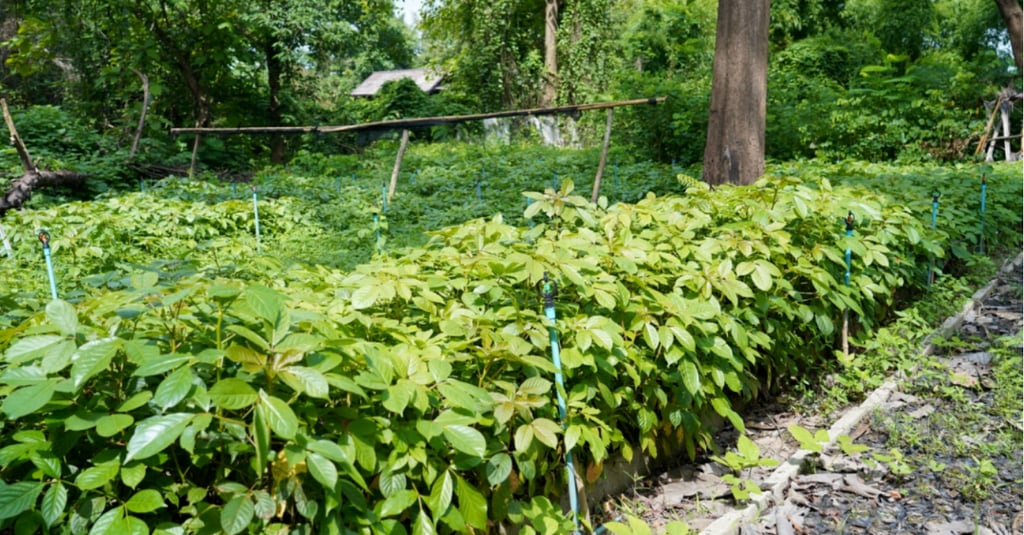
At a recent international conference, the Lao government reaffirmed a green target: to achieve 70% national forest cover by 2030. This figure is not only about the ecological environment but also about international aid and carbon credit trading. By committing to 70% forest cover, Laos has successfully attracted special grants from international institutions such as the Global Environment Facility (GEF) and is actively participating in forest carbon credit trading, using "green assets" to secure development funding. At the same time, this commitment helps Laos build a low‑carbon development image within ASEAN and helps alleviate external concerns about the environmental impact of infrastructure projects.
However, setting a high target is one thing; achieving it on the ground is another, especially in grassroots areas with limited funding and weak technical capacity. When national targets filter down to provinces and districts, they translate into concrete tree‑planting numbers: Luang Prabang Province must plant 1 million trees a year and restore 300 hectares of forest; Dao District in Salavan Province must plant 218,000 trees and restore 306 hectares. For grassroots officials, these numbers are hard tasks. In the past, many places suffered from the problem of "heavy planting, light maintenance" — trees were planted with great fanfare on Tree Planting Day, photos were taken, and then no one took care of them, leading to low sapling survival rates. The reason is simple: no special maintenance funds, and villagers have no incentive to protect the forest.
To solve the chronic problem of "planting trees year after year but seeing no forest," Dao District in Salavan Province introduced a new approach this year. They broke down the planting tasks: the district government is responsible for planning and supervision; the National Park Management Office handles ecological replanting; and private enterprises (such as Lao Agrotech) are brought in to provide funding and undertake most of the planting. In return, these enterprises gain long‑term rights to develop forestry or non‑timber forest products in non‑core protected areas. More crucially, the contracts explicitly include a strict clause requiring "compensation at the original price for dead saplings," forcing enterprises and park managers to shift their focus from "how to plant" to "how to manage" — employing villagers to patrol, building irrigation facilities, and carrying out regular replanting.
The benefits of this mechanism are clear: the government saves fiscal and human resources, enterprises gain a clear revenue outlook, and villagers earn labor income from planting.
Of course, this high‑pressure approach also faces practical difficulties. In the event of extreme drought or flooding, excessive compensation risks may deter enterprises. Finding the balance between "strict accountability" and "reasonable fault tolerance" still requires further exploration by grassroots governments.
At the end of the day, Laos' target of 70% forest cover is a long‑term ecological project. Relying solely on international funding and policy slogans is not enough. The key is whether grassroots authorities can truly raise trees and raise them well. The experiment in Dao District shows that bringing in enterprises, clarifying responsibilities, and linking rewards to penalties can effectively improve the formalism that has plagued greening efforts in the past. But for saplings to become forests, there must also be reasonable space for enterprise development, and villagers must directly benefit from forest protection. Only when "green leaves" translate into "real income" in people's pockets can Laos' green blueprint avoid falling short.
connect
Discover a rapidly developing Lao
info@laosbn.com
© 2025. All rights reserved.