
Laos' "Dialectics of Survival": Laos Poised to Become ASEAN's Fastest Economy in EV Adoption
This is not merely an emergency response to economic woes, but a "dialectics of survival" for Laos based on national security and long‑term development.
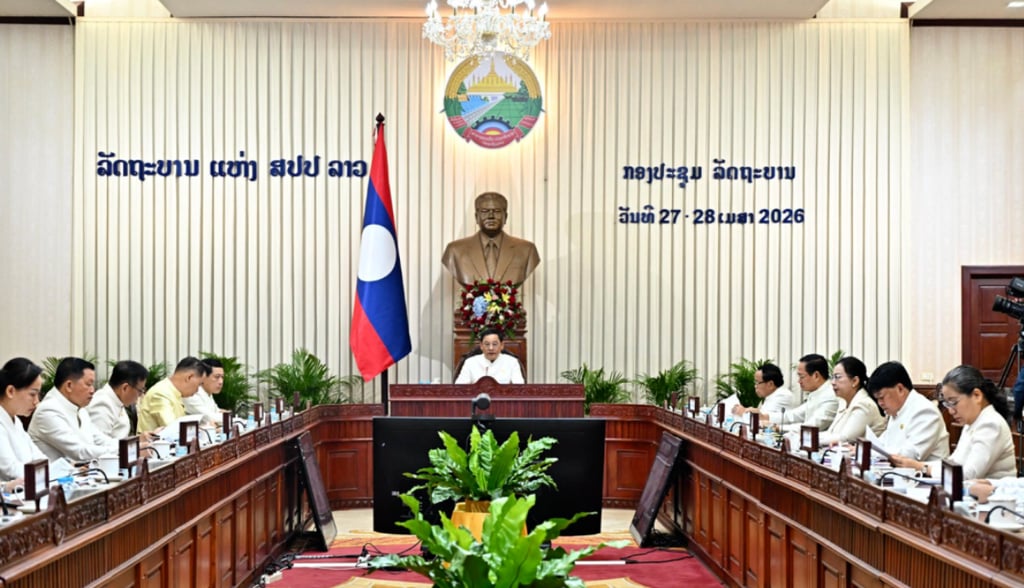
At the just‑opened regular monthly meeting of the Lao government in April, Prime Minister Sonexay Siphandone delivered a powerful message: Prime Ministerial Order No. 40 (40/PM) must be fully implemented to transform the severe fuel and inflation crisis into a strategic opportunity for green transition. This is not merely an emergency response to economic woes, but a "dialectics of survival" for Laos based on national security and long‑term development.
Switching Lanes to Overtake: From "Import Dependence" to "Energy Autonomy"
As a landlocked country, Laos has long suffered a structural helplessness in energy consumption – 100% dependence on imported fuel. Whenever international oil prices fluctuate or the local currency comes under pressure, domestic prices react like frightened birds, directly impacting people's livelihoods. Yet the other side of the coin is Laos' abundant hydropower resources. The awkward situation of "having a golden bowl while begging for food" has reached a point where change is imperative.
Sonexay's emphasis on promoting electric vehicles (EVs) and renewable energy is essentially about pushing Laos to leap from the "fuel era" to the "electricity era." By replacing oil with electricity, Laos can convert power – which was either exported for foreign exchange or left idle during the dry season – into an endogenous driver for national transformation. This will not only reduce foreign currency outflows but also enable Laos to establish "energy sovereignty" based on green energy in regional geo‑economics, achieving true survival autonomy.
Leveraging Momentum: When the China‑Laos Railway Meets the EV Industrial Chain
Laos' green ambition is not a castle in the air. Its confidence stems not only from its hydropower but also from deep integration with China's mature EV industrial chain. With the regular operation of the China‑Laos Railway, a low‑cost, high‑efficiency logistics corridor has been paved, facilitating the large‑scale entry of Chinese electric vehicles, battery components, and charging equipment.
Laos is poised to become a "small‑but‑beautiful" economy within ASEAN with the fastest EV penetration and the lowest transition cost. This seamless industrial chain connection will not only quickly reduce travel costs for the Lao people but also drive upgrades in domestic auto repair, assembly, and related service industries. In this process, Laos is not just a technology user but a pioneering demonstration area for international cooperation in green mobility.
Overcoming Difficulties: Unblocking the "Last Obstacles" to Green Growth
However, the dialectical unity of crisis and opportunity depends on effectively tackling the difficulties. The government is soberly aware that to achieve this strategic leap, three major challenges must be confronted:
Infrastructure gaps: The coverage of charging stations determines the viability of EVs. The government needs to combine fiscal incentives with private capital to rapidly build a recharging network.
Fleet iteration: The scrappage and replacement mechanism for old vehicles touches on social equity and the pace of transition. More attractive tax breaks and financial support policies are needed.
Grid upgrades: As the center of gravity of electricity demand shifts from industry to transport, the grid's peak‑load capacity and smart‑grid capabilities will face severe tests.
"Turning crisis into opportunity" is not an empty slogan; it is a profound test of national resilience. The decisions made by the Lao government at its April meeting demonstrate clear‑headed thinking and strategic resolve amid a complex international landscape. As the mighty waters of the Mekong turn into the driving force beneath wheels, Laos is leaving the century‑old shadow of fossil fuels behind and accelerating toward a cleaner, more autonomous, and prosperous green future. (laosBN)
connect
Discover a rapidly developing Lao
info@laosbn.com
© 2025. All rights reserved.