
Laos' ASEAN Diplomacy in Cebu: A Green Entry Point for Clean Energy Investment
LaosBN
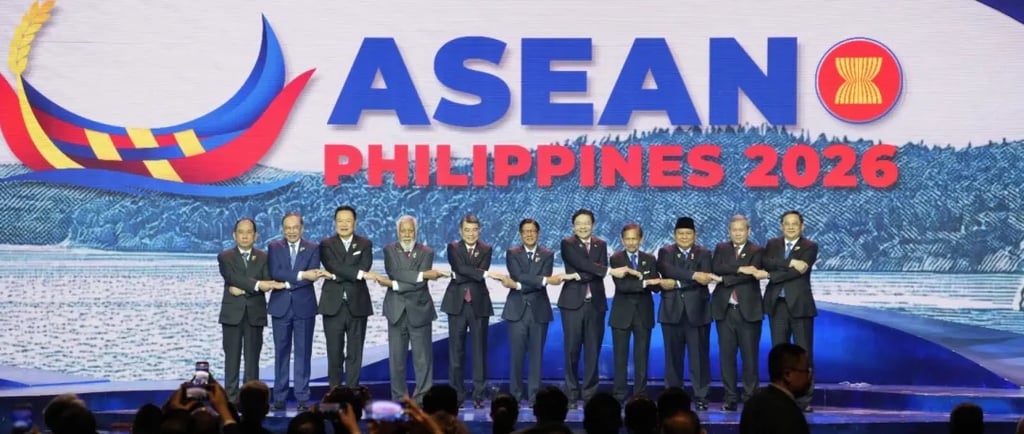
The 48th ASEAN Summit in Cebu, Philippines, was not only a routine regional multilateral meeting but also an important "diplomatic parade" for Prime Minister Sonexay Siphandone following his re-election. By examining his intensive bilateral meetings, we can clearly discern that Laos is attempting to forge a new strategic path — transforming from a "dependent neighbor" into a "hub partner."
The Intergenerational Transmission of Laos-Vietnam Relations: From Traditional Friendship to Strategic Symbiosis
The first official meeting between Prime Minister Sonexay and Vietnam's newly appointed Prime Minister Le Minh Hung was the most closely watched "joint appearance" at the summit. This was not merely a ceremonial meeting between the heads of government of the two new administrations, but a substantive calibration of the cooperation framework for the next decade.
Early release of the 2027 double anniversary effect: 2027 marks the 65th anniversary of Laos-Vietnam diplomatic relations and the 50th anniversary of the signing of the Laos-Vietnam Treaty of Amity and Cooperation. This meeting effectively launched a two‑year "project acceleration period."
"Hard" connectivity through cross‑border infrastructure: Major projects such as the Vientiane‑Hanoi Expressway and cross‑border power grids are no longer just on paper. As Vietnam's electricity demand gap widens and Laos urgently needs access to the sea, the Laos-Vietnam partnership is evolving from "political trust" into an economic symbiosis centered on land‑sea intermodal transport.
Strategic observation: This marks the intergenerational transmission of Laos-Vietnam relations. While maintaining traditional special solidarity, both sides are now deeply locking their interests into the regional supply chain through heavy asset investment.
The "Green Entry Point" of Laos-Philippines Cooperation: Breaking Marginalization Through the "Energy Lever"
In the past, economic and trade exchanges between Laos and the Philippines were relatively marginal due to geographical distance. However, the high‑profile interaction at this summit on "clean energy investment" reveals a significant shift in Laos' diplomatic strategy.
The spillover effect of the "Battery of Southeast Asia": Laos is precisely leveraging the pressure of the Philippines' domestic energy transition (coal phase‑out). Through power exports and clean energy development cooperation, Laos is reshaping itself from a landlocked country into a regional source of clean energy supply.
Attracting non‑traditional capital: For a long time, Lao investment has come mainly from neighboring countries. Now, proactively engaging with Philippine capital reflects Laos' intention to diversify its investment sources within ASEAN and reduce its dependence on a single economy.
Strategic observation: The Philippines is the rotating chair of ASEAN in 2026. Deepening cooperation with the Philippines helps Laos secure a more favorable position in the ASEAN agenda, using "green energy" as a common denominator to move from the periphery of ASEAN toward the core of interest exchange.
The Deep Logic of Reconstructing the ASEAN Circle of Friends: From "Landlocked" to "Connected"
Prime Minister Sonexay's diplomatic trajectory reveals three key logics for Laos' future economic direction:
Energy leadership: Using electricity trade as a diplomatic entry point, transforming Laos' resource advantages into a voice in regional governance.
Diversified engagement: While maintaining traditional relations with China, Vietnam, and others, expanding the circle of friends through the Philippines, Cambodia, and other countries to build multi‑layered moats of security and economy.
Infrastructure closure: Through cross‑border transport networks, truly turning a "landlocked country" into a "land‑linked country" connecting the Chinese market with the ASEAN market.
Special Observation:
Laos' diplomacy at the Cebu Summit presents a new atmosphere of "pragmatism, proactivity, and diversification." Laos is no longer just a participant passively accepting agendas, but has begun to actively weave a complex web of mutual interests within ASEAN, leveraging its own resource endowments (energy and geography). This reconstruction of the "circle of friends" is not only for short‑term economic gains but also to seek greater strategic room for maneuver for Laos amid a rapidly changing international environment.(LaosBN)
connect
Discover a rapidly developing Lao
info@laosbn.com
© 2025. All rights reserved.