



The "Agonizing Self‑Renewal" of Southeast Asia's Battery: Rebuilding Credibility and Survival in the Power Sector Through EDL's "Hard‑Nosed" Rectification in Vientiane Province
Power laos
For a long time, Laos achieved explosive growth in power generation capacity by building hydropower dams with massive borrowing. However, the distorted structure of "heavy generation, light transmission and distribution" has left its domestic power grid extremely fragile, with rainy‑season blackouts and dry‑season shortages becoming the norm. More critically, with the sharp depreciation of the Lao kip in recent years, EDL (Electricité du Laos) has seen its cross‑border debt denominated in US dollars and Thai baht snowball, trapping it in a vicious financial cycle: "selling electricity for kip, but needing foreign currency to repay debt."
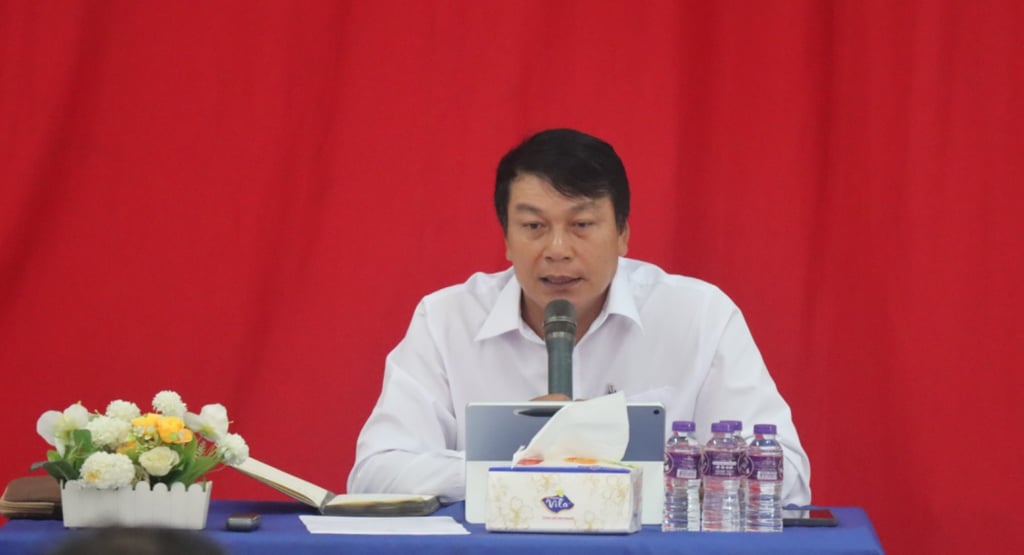
Against this backdrop, the "2‑4‑7" strategic reform (2 political tasks, 4 internal reforms, 7 key performance indicators) proposed by EDL is essentially an "ultimatum" issued by Laos' top leadership to the state‑owned enterprise. When Khanxay Manichan, Director of the Central Management Department, led his team to "directly strike" five major grid hubs in Vientiane Province — including Phonhong and Vangkhong — his goal was to hammer the political pressure and survival crisis from headquarters down into the grassroots power bureaucracy, which has long lacked awareness of market competition.
1. Core Analysis: The Underlying Logic of "Technical Weekly Inspection" and "Service 24‑Hour"
In this rectification, the EDL Central Management Department issued two "hard directives" at the grassroots level. These two technical moves directly target the two weakest links in Laos' power sector.
On the technical side: The "weekly inspection system" for routine clearing of obstacles along transmission and distribution lines — cutting out the chronic problem of "relying on the heavens"
Pain point background: Laos has a tropical monsoon climate. May marks the beginning of the rainy season, when strong winds, lightning, and rampant vegetation growth touching power lines are the "number one killers" causing large‑scale blackouts and regional power failures. In the past, grassroots power stations had lax management; they would only "repair after a power cut, and never maintain until the wind blows."
In‑depth explanation: The forceful push for a "weekly inspection system for routine clearing of obstacles along long‑span transmission and distribution lines" uses a system of "high frequency and rigid pressure" to counter the passive work attitudes of grassroots employees. By refining the responsibility for clearing obstacles down to every week and every kilometer, EDL is trying to shift, at the technical level, from "post‑incident repair" to "pre‑incident prevention," reducing the huge power losses caused by technical failures — which is also a major source of fiscal hemorrhage for EDL.
On the service side: The 24‑hour time‑limited repair and first‑contact responsibility system — smashing the "bureaucratic style" iron rice bowl
Pain point background: As an absolutely monopolized state‑owned enterprise, EDL's grassroots power stations have long had a serious "bureaucratic style." Faced with power outage reports from enterprises or residents, passing the buck and slow responses were common occurrences.
In‑depth explanation: Establishing a "24‑hour time‑limited repair and first‑contact responsibility system," with strict prohibition of passive responses to customer demands, is an attempt to introduce modern commercial service concepts into a Lao state‑owned enterprise. By directly linking service timeliness to the "7 KPIs," it breaks the iron rice bowl expectation among grassroots employees that "you get the same regardless of how much you do." This is a "behavioral rectification" of the surplus labor and inefficient work style in the state‑owned enterprise.
Strategic Significance: Rebuilding the "Power Supply Credit Endorsement" for Cross‑Border Corridors and Industrial Zones
The reason Vientiane Province has become the core battleground for this reform advocacy is that it geographically holds the throat of Laos' modernization transformation – the China‑Laos Railway, the China‑Laos Economic Corridor, and a large number of cross‑border industrial parks are all concentrated here. The ultimate strategic value of this "internal capability building" at the grassroots level of EDL is by no means merely to reduce the number of power outages for ordinary residents, but to rebuild Laos' "credit endorsement" for investment attraction.
Securing the lifeline of new productive forces (taking the China‑Laos Railway as an example): As an electrified railway, the China‑Laos Railway has extremely high requirements for voltage stability. A single brief large‑scale regional blackout could paralyze the entire cross‑border artery. By forcing the weekly inspection system and time‑limited repair in the central hub area (especially Vientiane Province adjacent to Vientiane Capital and the railway trunk line), EDL is issuing a "pledge" for the operational safety of the China‑Laos Railway.
"Building nests to attract phoenixes" for cross‑border industrial parks: Currently, Laos is making every effort to attract manufacturing capacity shifting from China and Vietnam. The various industrial parks and high‑tech parks within Vientiane Province are core hosting areas. For modern manufacturing (such as electronics assembly, mineral refining, and light industry), the "stability" of power supply is even more important than the "price of electricity." If the power system continues to maintain its previous inefficiency and high failure rate, Laos' promise of "undertaking capacity shifts" will become empty talk. Through this KPI‑driven mechanism, the EDL Central Management Department is, in effect, sending a signal to international capital: Laos is fighting desperately to wash away its bad reputation of an "unstable power grid" and is striving to provide deterministic, international‑standard energy security for cross‑border industrial parks.
LaosBN Observation: The Battery Moving Toward a "Hard Landing of Technology and Institutions"
Laos' title as the "Southeast Asia Battery" was, in the past, a "facade of rotten stucco" built on natural endowments and foreign debt. Today, EDL's front‑line rectification in Vientiane Province is a substantive step toward shedding its bloated appearance and trimming its internal capabilities. Whether this reform can succeed depends on whether the "2‑4‑7" strategy can achieve a "hard landing" when it meets resistance from entrenched grassroots interests. What is certain is that, driven by macroeconomic crisis, Laos has realized: without the stability of the micro‑grid and the rebuilding of service credibility, no amount of installed hydropower capacity can support the dream of becoming a regional industrial power in the era of globalization.
connect
Discover a rapidly developing Lao
info@laosbn.com
© 2025. All rights reserved.