



Southeast Asia's First Transnational World Natural Heritage Takes Shape: How to Monetize 220,000 Hectares of Karst Landscape?
Transboundary Heritage
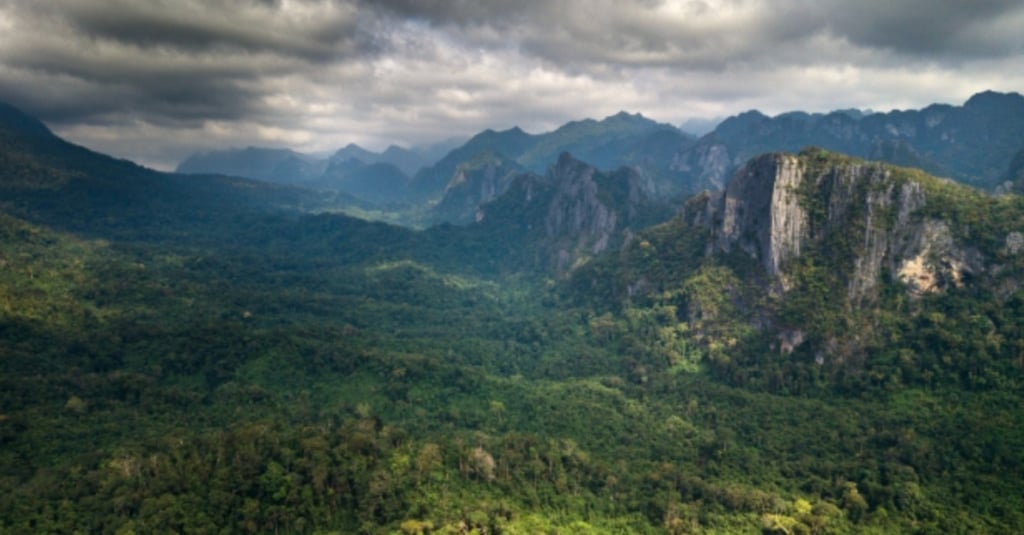
In mid‑May, a high‑level delegation from Khammouane Province, Laos, led by Provincial Party Secretary Saysana, visited Quang Tri Province, Vietnam. Among the multiple consensuses reached by the two sides, the joint cultural tourism development of the "Phong Nha‑Ke Bang (Vietnam) – Hin Nam No (Laos)" transnational World Natural Heritage site became a key area of cooperation.
Not long ago, UNESCO officially approved the extension of Vietnam's Phong Nha‑Ke Bang National Park to include Laos' Hin Nam No National Park, combining them into Southeast Asia's first transnational World Natural Heritage site. The Khammouane delegation's visit to Vietnam marks the transition of this project from the nomination phase to the implementation phase. Drawing on global experience with transnational World Heritage sites, this cooperation is expected to reshape the cultural tourism landscape of the Indochina Peninsula and provide a new growth driver for the central region of Laos.
According to official UNESCO data, of the 1,199 World Heritage sites worldwide, only 49 are transnational (or joint) properties, accounting for about 4% of the total. Such sites typically include famous mountain ranges, large forests, great waterfalls, or karst cave systems that straddle two countries — nature does not respect national borders when defining ecosystems.
Internationally, similar examples include Victoria Falls (Mosi‑oa‑Tunya) shared by Zambia and Zimbabwe; the Waterton‑Glacier International Peace Park shared by the United States and Canada; the East African Great Migration ecosystem shared by Kenya and Tanzania; and the Silk Roads shared by China, Kazakhstan, and Kyrgyzstan. The Silk Roads, in particular, is Asia's most epic transnational cultural heritage: stretching 5,000 kilometers and encompassing 33 sites (22 in China, 8 in Kazakhstan, and 3 in Kyrgyzstan). The joint management of transnational heritage has developed a relatively mature operational framework. What Laos and Vietnam are now advancing is the localized application of this model.
Hin Nam No and Phong Nha‑Ke Bang belong to the same Annamite Mountain karst belt, with underground rivers and rare species (such as the red‑shanked douc langur) naturally migrating between the two areas. The core of the bilateral cooperation lies in breaking down administrative boundaries, jointly formulating ecological protection plans, and implementing unified scientific monitoring and environmental access standards. This approach is similar to the joint management model of the Waterton‑Glacier International Peace Park by the United States and Canada.
Phong Nha‑Ke Bang in Vietnam already has mature experience in the commercial development of cave expeditions (such as Hang Sơn Đoòng), high‑end booking systems, and concession operations. During this visit, the Lao side requested assistance from Vietnam in grassroots cadre training and management experience, hoping to leverage Vietnam's mature cultural tourism operation capabilities to raise the international standard of the Lao side of the heritage site.
From an economic perspective, this transnational heritage — covering approximately 220,000 hectares of karst landscape — is expected to bring several concrete changes to Laos and Vietnam in the future.
Currently, due to border crossing formalities, the flow of tourists between the two sites is restricted. The future direction is to achieve "integrated ticketing" and streamlined border clearance. International tourists who purchase a transnational package ticket could, under the guidance of professional tour leaders, enter the Lao side from the Vietnamese side via underground rivers, enjoying visa‑free or simplified customs procedures for up to 72 hours.
The Vietnamese side (Phong Nha‑Ke Bang), with its well‑developed major transportation links and high international visibility, will continue to serve as the primary gateway for international visitors and as a high‑end adventure destination. The Lao side (Hin Nam No), as a newly developed area, can focus on scientific research tours, rural experiences, and cost‑effective travel options, attracting tourists extending from the Vietnamese side.
The two countries will jointly establish a digital underground space monitoring system, a transnational joint laboratory, and a joint anti‑poaching patrol mechanism to ensure the sustainability of ecological resources.
The recognition as a World Natural Heritage site is expected to bring a significant economic boost to central Laos. First, it will increase international tourist spending and foreign exchange earnings. Vietnam's cave expeditions have already attracted large numbers of high‑spending European and American tourists. With the opening of a transnational tourism route, Laos' Hin Nam No can tap into this visitor pool. Tourists' spending in Laos — on accommodation, guides, and transportation — will directly generate foreign exchange revenue for the local economy.
Second, it will drive the improvement of transport infrastructure in central Laos. The development of the transnational heritage site will spur the upgrading of major roads, such as the Vientiane‑Thakhek highway and National Road No. 12 connecting to the Vietnamese border. This will also enhance Laos' cross‑border freight and logistics capacity in the central region.
Third, it will create local employment and poverty reduction opportunities. Around Hin Nam No National Park there are several poor villages. With support from international organizations, local villagers can be trained as cave guides, safety rescue staff, patrol officers, and homestay operators — providing employment that allows them to stay on their land and in their communities.
Fourth, it will foster a green, low‑carbon economic model. The development of this heritage site does not rely on mineral extraction or forest resource consumption; it is a low‑carbon industry. Taking this as an opportunity, Khammouane Province can also develop surrounding organic ecological agriculture, supplying local produce to international tourists, thereby forming a linked model of "ecological protection – high‑end cultural tourism – local agriculture."
The joint development of the Laos‑Vietnam transnational World Natural Heritage site is essentially Laos using its natural resources, combined with Vietnam's existing experience in the tourism market, to open a green economic corridor. This not only adds an internationally attractive ecotourism destination to central Laos but is also a concrete practice of Laos' strategy to "prosper the nation through tourism" driven by "ecological cooperation."
connect
Discover a rapidly developing Lao
info@laosbn.com
© 2025. All rights reserved.