
Inflation Rate Breaks into Single Digits: The Narrative Shift and Real Challenges of Laos' Macroeconomic Governance
Laos economy
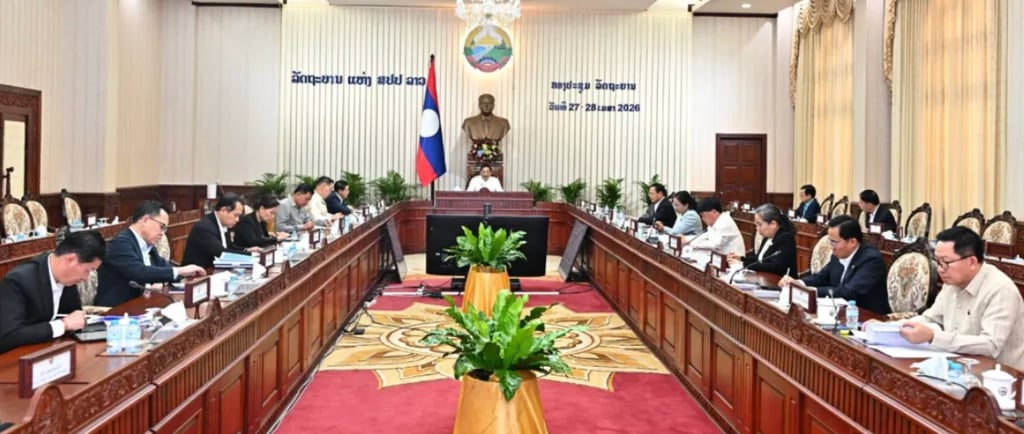
Under the dual pressures of global geopolitical turbulence and energy market volatility, the Lao government released a highly symbolic signal at its regular monthly meeting in April 2026: the inflation rate fell to 9.7% in the first quarter.
This figure not only marks the return of Lao inflation to the "single‑digit era," but also reflects a profound shift in the current government's macroeconomic logic – a leap from reactive "crisis response" to proactive "strategic intervention."
Crossing the Psychological Threshold: Reshaping Market Expectations
9.7% – in economic terms, this number represents not just the level of prices, but a country's "credit score." The prolonged double‑digit inflation of the past once trapped the market in a vicious cycle of "depreciation – price hikes – panic hoarding."
The return of the inflation rate to single digits is essentially the government's "battle to defend expectations." By setting an official tone through the Prime Minister's Office, the Lao government is trying to send a clear signal to domestic and international investors: the most turbulent period of the macroeconomy has passed, and national governance has entered a stable path of recovery. This narrative shift plays an irreplaceable role as an "anchor" in subsequently attracting high‑quality foreign investment and stabilizing the Kip exchange rate.
Reshaping Governance Tools: A Dual Approach of Administrative and Structural Measures
The announcement reveals the core path the Lao government has taken to "control inflation," showing clear characteristics of addressing both external and internal factors.
Return of monetary sovereignty: Through strong intervention in exchange rates and reinforcing the legal status of the Kip, the government is trying to cut off the transmission channels of imported inflation. This is not only financial tightening, but also a strong return of national sovereignty in the realm of circulation.
Structural relief (Order No. 40/PM): Unlike simple price controls, promoting electric vehicles (EVs) and transforming energy management represents a "dimensionality reduction" attack. By reducing dependence on imported fuel, Laos is attempting to structurally lower the "external sensitivity" of its national economy.
Hard constraints on end‑market regulation: Strict monitoring of the prices of daily necessities protects the basic social livelihood and prevents the risk of second‑round inflation.
"Partial Stability" in a Global Context: The Shadow of Geopolitical Rivalry
It is worth noting that while highlighting achievements, the announcement did not ignore external variables such as the "Middle East situation" and "international oil prices." This reflects the sober stance of the Lao government: Laos' economic stability is not taking place in a vacuum.
In the context of a strong dollar cycle and the spill‑over effects of geopolitical conflicts, a 9.7% inflation rate is more like a "precarious balance." The Lao-China Information Network believes that the Lao government is using the current policy window to find a space of "partial stability" amid complex international rivalries, leveraging hub monetization and resource integration to build its own economic immunity.
The Steadiness to Navigate in "Shallow Waters"
Prime Minister Sonexay Siphandone's warning at the meeting – "strictly guard against a rebound" – reveals the fragility of the current governance.
For observers focused on Laos, 9.7% should not be interpreted as the finish line of success, but rather as the starting point of structural reform. Laos is trying to transform itself from a victim of global fluctuations into an enforcer of regional rules and a recipient of hub dividends. Whether it can defend this single‑digit line in the coming second quarter will be the most stringent test of the Lao government's fiscal and financial discipline.(laosBN)
connect
Discover a rapidly developing Lao
info@laosbn.com
© 2025. All rights reserved.