
Co-location Inspection" Unlocks the Golden Throat of Laos as a "Land-Linked Country
Unlocks the Golden Throat of Laos as a "Land-Linked Country
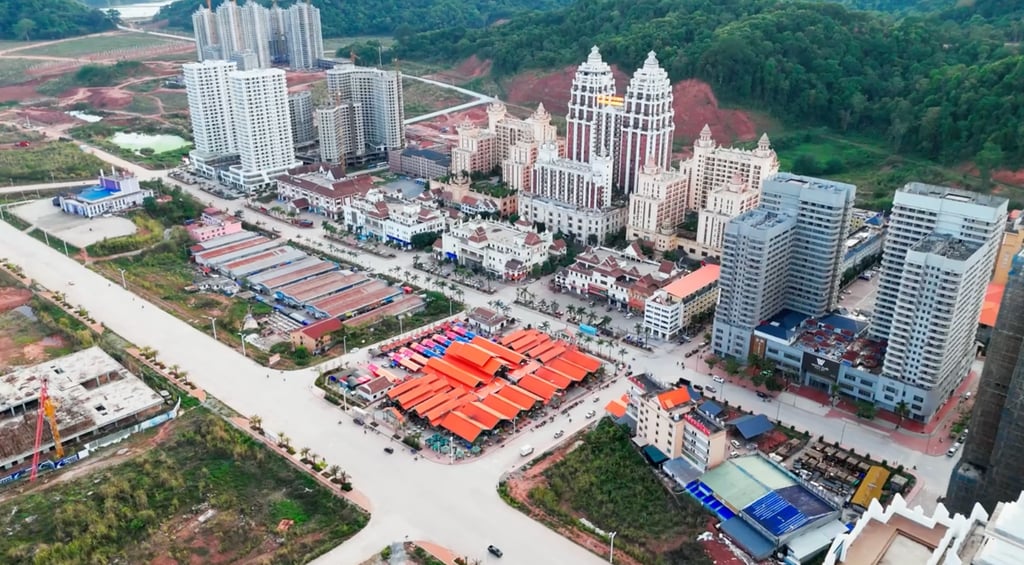
Bathed in the warm spring breeze of the 65th anniversary of China-Laos diplomatic relations and the "2026 China-Laos Friendship Year," good news came from the 21st Meeting of the Joint Boundary Committee between China and Laos: the two sides reached key consensus on the "12-lane survey results" for the Boten-Mohan border checkpoint and the "Single Window Inspection" (co-location) model. This is not just the overlapping of coordinate lines on a map; it represents the "last mile" in removing logistics bottlenecks and achieving a qualitative leap for Laos as it transitions from a "landlocked country" to a "land-linked country."
Since the opening of the China-Laos Railway, the contradiction between massive freight volumes and limited checkpoint clearance efficiency has become increasingly prominent. The traditional "two stops, two inspections" model often leaves cross-border goods stranded at the border for hours or even days.
The implementation of the "Single Window Inspection" at Boten-Mohan is essentially an "efficiency revolution." Through deep physical integration and extreme streamlining of administrative procedures, law enforcement agencies from both countries will work together in the same area, enabling "one inspection, one release." This means that waiting times for cross-border trucks and passengers are expected to be cut by more than half. In modern trade, where "time is money," every minute saved will translate into tangible profits for enterprises along the China-Laos Railway.
The combination of the 12-lane configuration and the highly efficient inspection model will completely reshape the economic landscape of northern Laos. For a long time, border areas have mainly served as trade corridors, typifying a "transit economy."
With the exponential improvement in customs clearance efficiency, Boten-Mohan will no longer be just a gateway, but a huge "economic gravitational field." Seamless flows will attract capital and industries to converge on the checkpoint, driving northern Laos to transform from simple material transshipment to high-value-added activities such as border storage, cold-chain logistics, primary processing, and even bonded trade. This transformation will create more jobs for Laos and bring genuine prosperity to its border regions.
The difficulty of "co-location inspection" lies not in civil construction, but in "institutional synergy." Given the different legal systems and regulatory standards of China and Laos, achieving joint law enforcement in the same physical space tests not only diplomatic wisdom but also demonstrates the high level of mutual trust within the China-Laos community with a shared future.
This administrative collaboration, which respects the sovereignty of each side, provides a highly valuable "Asian model" for border governance between China and ASEAN countries. It proves that as long as the spirit of "four good" (good neighbors, good friends, good comrades, good partners) is upheld, institutional differences can be turned into drivers of cooperation.
The upgrade of the Boten-Mohan checkpoint is a key node for unlocking the dividends of the China-Laos Railway, a "golden route." When co-location inspection makes the border seamless, and when 12 lanes make trade flow smoothly, what we see is not only a surge of vehicles and goods, but also the majestic sight of China and Laos running hand in hand on the path to modernization. This breakthrough in the last mile will surely lead China-Laos economic and trade cooperation toward a vast and smooth journey ahead. (laosBN)

connect
Discover a rapidly developing Lao
info@laosbn.com
© 2025. All rights reserved.