
A Millennium of Survival in Geographical Cracks: How Lao History Shaped the National Character and Development Logic
LaosBN
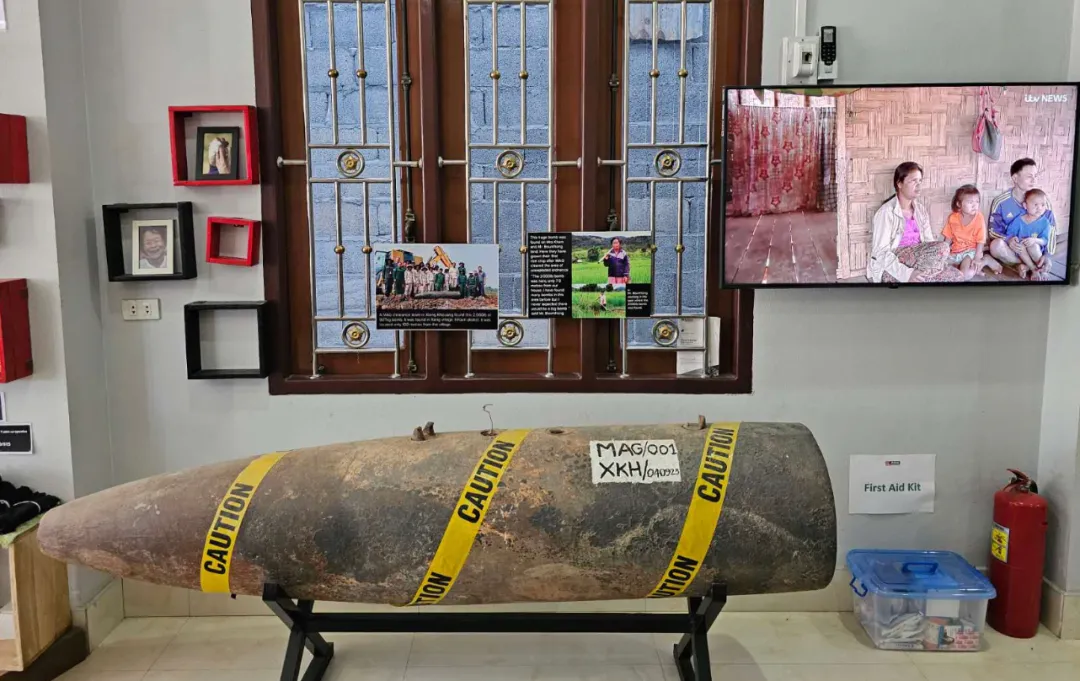
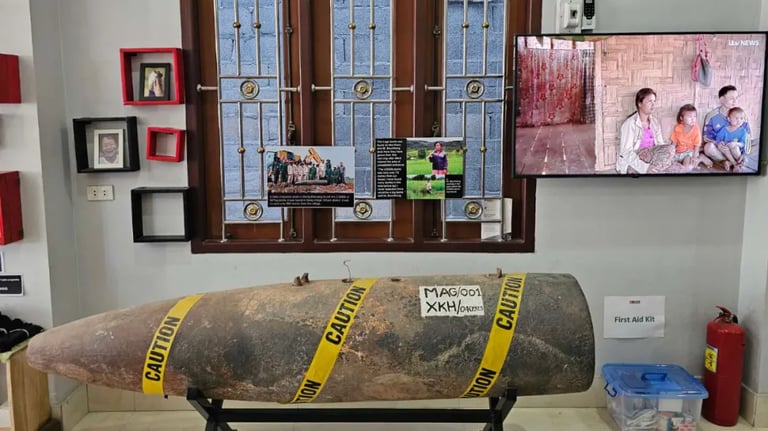
Recently, due to work, I had the opportunity to visit Xieng Khouang and four southern provinces of Laos. While touring Plain of Jars Site 2 and Site 3, a UNESCO World Heritage site in Xieng Khouang, our local Lao guide repeatedly stressed: "Please stay on the paved stone paths. There are still unexploded bombs around. Only move within the designated areas to avoid danger." The usually easygoing Lao people's alertness in these specific zones, combined with the presence of both Khmer ruins and Siamese influences, made me reflect on this country's character contrasts and its history.
Laos, the only landlocked country in Southeast Asia, now stands at the threshold of graduating from the ranks of Least Developed Countries. Yet to understand the country's development path and domestic and foreign policies today, we must return to the depths of its history. LaosBN combs through nearly three centuries of Laos' geopolitical fate, war trauma, and cultural foundations, attempting to sketch how a nation that has "survived in the cracks" has had its character shaped — and the development needs that arise from this.
A "Locked" Landlocked Country
The map of the Lao People's Democratic Republic resembles a butterfly resting on the Indochina Peninsula. It is surrounded on the east, north, and west by Vietnam, China, Myanmar, and Thailand, with Cambodia to the south. This butterfly has never truly flown — because it is the only landlocked country in Southeast Asia.
Today, Laos is trying to break its geographical fate through the "Land-Locked to Land-Linked" strategy. But on the streets and in the alleys, in government offices, and under the shade of temple trees, something more ancient still exerts its influence — centuries of "survival in the cracks" that have etched their survival rules into the national psyche, giving rise to a unique development logic.
After Lan Xang: The Legacy of Division and the Fate of a "Buffer State"
In the mid-14th century, King Fa Ngum unified the Lao tribes and established the Kingdom of Lan Xang. This was the most glorious period in Lao history, with its territory once covering all of today's Laos and northeastern Thailand. However, Lan Xang's prosperity did not change a fundamental dilemma: it was a kingdom without natural barriers.
"To the east, the Annamite Cordillera was not enough to stop Vietnamese invasions; to the west, the Mekong River did not prevent Siamese armies from crossing repeatedly," notes the historical archives of the Lao National Culture Hall. The rise and fall of Lan Xang almost synchronized with the fortunes of the surrounding powers.
In the early 18th century, Lan Xang split into three kingdoms — Luang Prabang, Vientiane, and Champasak — due to a succession crisis. This division was not purely an internal affair: both Siam and Vietnam took the opportunity to install proxies, drawing the three small kingdoms into their tributary systems. Lao historian Sisavath Bounpon wrote in Laos: The Forgotten Tragedy: "We never really had a unified country. Before the colonizers arrived, Laos was already a buffer zone between Siam and Vietnam."
In 1893, French colonists incorporated Laos into the "Indochinese Union." Colonial rule brought the seeds of modern administration, law, and education, but also locked Laos in as a resource extraction outpost. More importantly, the borders drawn by the French became the foundation of today's Lao map — a landlocked country trapped by mountains and rivers.
One of the national psychologies left by history: Division stems from internal strife but is exploited by powerful neighbors. Therefore, any factor that could lead to internal disintegration is viewed with high vigilance. Unity, central authority, and sovereignty and territorial integrity have become absolute priorities in Lao political discourse.
The "Secret War": Bombs and Trauma
If colonialism was an externally imposed constraint, then the "Secret War" of the 1960s and 1970s was the most brutal external intervention in Lao history.
From 1964 to 1973, to cut off North Vietnam's "Ho Chi Minh Trail" running through southeastern Laos, the United States carried out massive bombing campaigns over Laos. According to U.S. Air Force archives, approximately 270 million submunitions were dropped — equivalent to nearly 100 bombs per square kilometer of Lao territory at the time. Laos thus became the "most heavily bombed country per capita in history."
"I hid in a cave for three years when I was a child," recalls Khamphan, a 78-year-old farmer from Xieng Khouang Province. "The bombs fell like rain. We dug caves and only dared to come out at dusk to find food. My brother was hit by shrapnel and died before reaching the hospital."
After the war ended, Laos was left with about 80 million unexploded ordnance (UXO) items. To this day, UXO has caused over 20,000 casualties. In Xieng Khouang Province in central Laos, large areas of land remain uncultivable, and it is common to see farmers using metal detectors to clear their fields.
The second national psychology from this war: Small countries have no voice in the games of great powers and can only become cannon fodder. Therefore, the underlying logic of Lao foreign policy is: never actively get drawn into major power confrontation; always seek multilateral balance. This is not cowardice, but a survival instinct taught by historical blood and tears.
After 1975: Socialism and the Embedding of "Special Relations"
In 1975, the Pathet Lao forces seized power, abolished the monarchy, and established the Lao People's Democratic Republic. The new regime relied heavily on external forces for ideological and national security — the military, cadre training, and intelligence systems were deeply intertwined with neighboring countries.
This "special relationship" is not a one-sided dependency by Laos, but is based on the shared history of resisting the Americans to save the nation. During the Vietnam War, Laos' "Ho Chi Minh Trail" provided a critical supply line for North Vietnam, for which Laos paid a heavy price. The blood alliance continues to this day.
However, after the Cold War ended, Laos began to adjust slowly. Joining ASEAN in 1997 marked its shift from "dual dependency" to a multilateral framework. Economically, Laos gradually opened up to all major powers, but it has always maintained a special "trust circle" in security and political matters.
The third national psychology shaped in this phase: Independence and autonomy are the highest principles, but the way to achieve independence is not through isolation but through maintaining flexibility among multiple external options. The Lao elite generally possess a "multi-directional cognitive" ability — being able to maintain friendly relations with different major powers simultaneously without feeling contradictory.
Buddhism and the Countryside: The "Slowness" and "Resilience" of Society
Beyond geopolitics and war, another crucial foundation of Laos is Theravada Buddhism. About 66% of the population practices Buddhism. Temples are not only religious sites but also centers for village education, healthcare, and cultural activities.
"In Laos, monks enjoy extremely high social status," a local scholar in Vientiane told this reporter. "A decision that does not have the support of the temples is almost impossible to implement in rural areas."
Buddhism gives Lao society a "slow" resilience. In contrast to Vietnam's Confucian-style assertiveness and Thailand's commercial-style flexibility, the Lao people tend to "live well in the present." "Bo PeNyang" (never mind) and "Sabaidi" (take it easy) are common everyday words.
This cultural characteristic, when faced with rapid social change, manifests not as confrontation but as a "soft filter" — new things from outside can enter, but if the pace is too fast, local habits are ignored, or community authority is not respected, passive resistance may occur. Lao society never confronts head-on, but it has its own way of letting unsuitable changes "fade away naturally."
This is the fourth layer of the national psyche: Flexible resilience rather than rigid resistance, adaptation rather than confrontation. The Lao people are good at bending before irresistible forces — but bending is not breaking.
Development Needs: The Urge to Break Through from "Land-Locked" to "Land-Linked"
Laos' national development strategy has always revolved around one core goal: breaking the landlocked predicament and gaining development autonomy.
This longing stems from two levels. First, economic logic — without a coastline, logistics costs remain high, making integration into global supply chains difficult. Second, psychological logic — the humiliation of having long been treated as a "buffer zone" in history drives the Lao elite to prove that this country can become a proactive connector rather than a passive corridor.
Based on this, Laos has elevated the "Land-Locked to Land-Linked" strategy to a national priority. Its core demands are: (1) physical connectivity — connecting to all neighboring countries through railways, roads, and power grids, making Laos a regional logistics hub; (2) institutional alignment — unifying customs, inspection and quarantine, and logistics standards to reduce cross-border transaction costs; (3) industrial cultivation — leveraging transit corridors to develop warehousing, processing, tourism, and other service sectors, creating employment.
This strategy is not exclusionary. It seeks cooperation with all neighbors, but the prerequisite is that Laos must be the proactive party, not a passive recipient. Over-dependence on any single direction would trigger alarms from historical memory.
What Laos pursues is not a "sense of belonging," but rather, through cooperation with stronger powers, to exchange for something it has never truly obtained in its history — a genuine sense of security and the dignity of a sovereign nation. This statement reveals the deepest psychological motive behind Laos' external cooperation.
The Mirror of History and the Path Ahead
Laos' history is a multi-faceted mirror — it reflects the pain of disunity, the trauma of war, the squeezing of powerful neighbors, but also the tolerance of Buddhism, the resilience of farmers, and the wisdom of small-state diplomacy.
Today, Laos is trying to rewrite the fate of a "landlocked country" with the blueprint of a "land-linked country." Its development needs are clear and urgent: it needs capital, technology, and markets, but even more, it needs respect for its autonomy, tolerance for its slower pace, and acceptance of its multi-layered diplomatic character.
Understanding this history is not about lamenting the past, but about grasping a fact: Laos is not a blank slate. It has its own grain. Anyone who tries to write a new chapter on this land must first read the words that are already there — the survival codes carved into the national marrow by war, Buddhism, rice, and the waters of the Mekong.
connect
Discover a rapidly developing Lao
info@laosbn.com
© 2025. All rights reserved.